IoT-based Soil Salinity Monitoring using sensors in Watermelon cultivation (Smart Agriculture Research, 2024).

In early 2026, the use of Internet of Things (IoT) for monitoring soil salinity has become a cornerstone of precision watermelon cultivation, particularly in regions like the Pothwar plateau or the semi-arid belts of South Asia and the Mediterranean.

Research published in Smart Agriculture Research (2024) and subsequent 2025 updates focuses on moving beyond simple data collection to Predictive Salinity Modeling.


🛰️ 1. The IoT Architecture for Salinity Monitoring

Watermelon is a “moderately salt-sensitive” crop, with yields dropping by 25% once soil electrical conductivity (EC) exceeds 3.5 dS/m. The 2024-2026 IoT frameworks utilize a layered approach to manage this risk:

  • Sensor Layer:
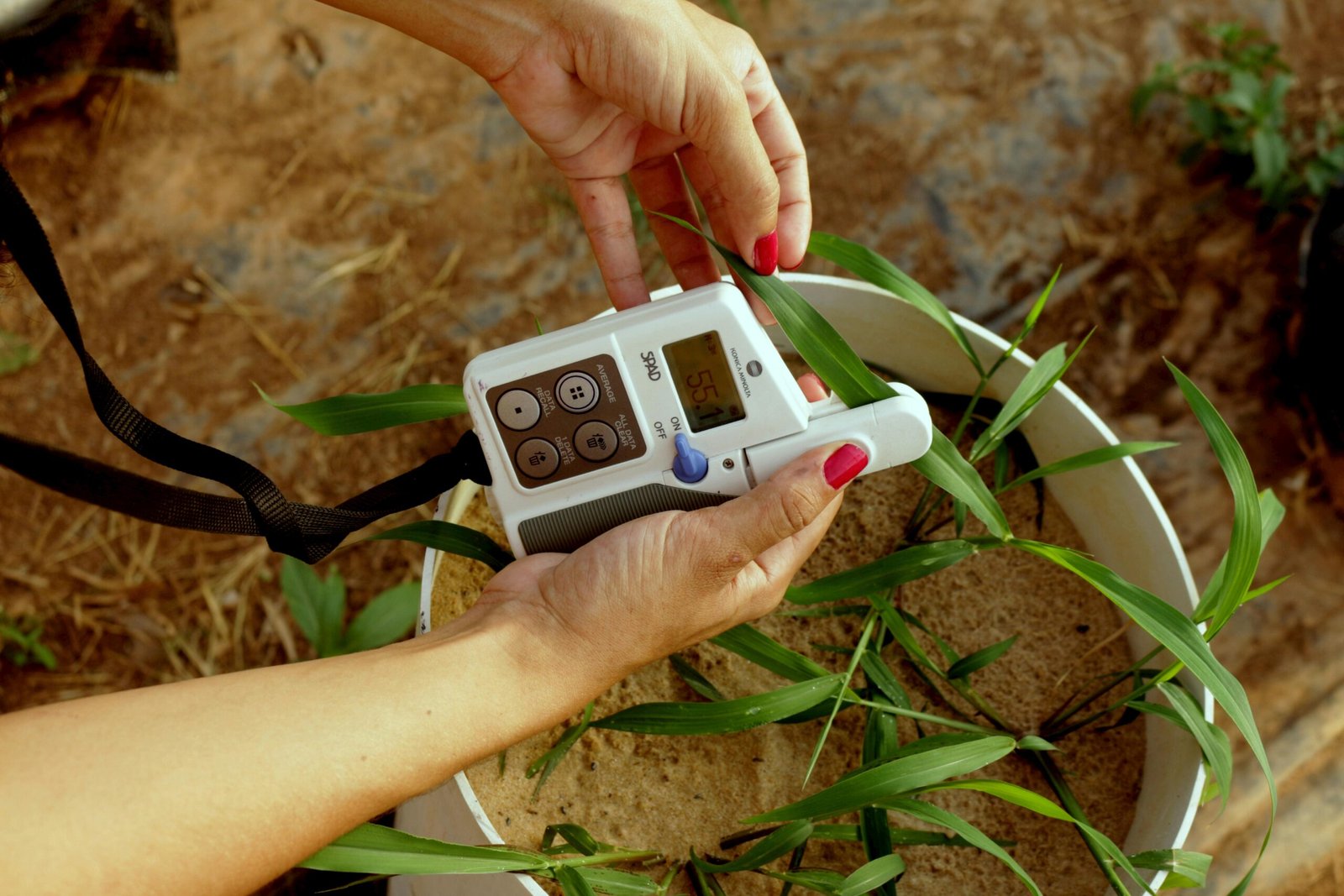
    • Electrical Conductivity (EC) Sensors: Integrated 3-in-1 probes (EC + Moisture + Temperature) are buried at two depths: 15 cm (root zone) and 40 cm (leaching zone).
    • Resistivity Probes: New research (2024) uses soil resistivity as a proxy for salinity. Sensors measure the resistance between two electrodes; as salt concentration increases, resistance decreases.
  • Transmission Layer: Data is sent via LoRaWAN (Long Range Wide Area Network) or NB-IoT, which are preferred for watermelon fields due to their low power consumption and ability to transmit through dense foliage over several kilometers.
  • Application Layer: Farmers receive real-time alerts via mobile apps (like Blynk or custom platforms) when salinity hits the “Warning Threshold” of 2.2 dS/m.

🤖 2. The ANN-Resistivity Model (2024 Breakthrough)

A significant development in 2024 is the use of Artificial Neural Networks (ANN) to translate raw sensor data into actionable salinity maps.

  • The Logic: Soil salinity is not just about salt; it’s affected by moisture and temperature. The ANN model takes inputs from soil resistivity, moisture, and temperature sensors to filter out “noise.”
  • Related Posts

    Phytobiome Communication and plant-microbe signaling for smart farming (Plant Science Research, 2025).

    In early 2026, the agricultural sector is moving beyond simply “measuring the soil” to “listening to the plants.” The field of Phytobiome Communication, which involves the complex signaling between plants,…

    Remote Sensing and Transformer-based Soil Quality Prediction using AI models (Precision Agriculture Review, 2024).

    In early 2026, the integration of Remote Sensing (RS) and Transformer-based AI models has set a new benchmark in precision agriculture. According to the Precision Agriculture Review (2024) and recent…

    Leave a Reply

    Your email address will not be published. Required fields are marked *

    You Missed

    Phytobiome Communication and plant-microbe signaling for smart farming (Plant Science Research, 2025).

    • By admin
    • February 9, 2026
    • 1 views
    Phytobiome Communication and plant-microbe signaling for smart farming (Plant Science Research, 2025).

    Remote Sensing and Transformer-based Soil Quality Prediction using AI models (Precision Agriculture Review, 2024).

    • By admin
    • February 9, 2026
    • 0 views
    Remote Sensing and Transformer-based Soil Quality Prediction using AI models (Precision Agriculture Review, 2024).

    IoT-based Soil Salinity Monitoring using sensors in Watermelon cultivation (Smart Agriculture Research, 2024).

    • By admin
    • February 9, 2026
    • 1 views
    IoT-based Soil Salinity Monitoring using sensors in Watermelon cultivation (Smart Agriculture Research, 2024).

    Artificial Intelligence-based irrigation and nitrogen optimization in Cotton (Precision Agriculture Research, 2025).

    • By admin
    • February 9, 2026
    • 0 views
    Artificial Intelligence-based irrigation and nitrogen optimization in Cotton (Precision Agriculture Research, 2025).

    Organic Fertilizer Substitution and Nitrogen efficiency in Rice production systems (Agronomy Journal, 2025).

    • By admin
    • February 9, 2026
    • 0 views
    Organic Fertilizer Substitution and Nitrogen efficiency in Rice production systems (Agronomy Journal, 2025).

    Crop Diversification for Sustainable Agriculture and ecosystem resilience (Frontiers in Agronomy, 2026).

    • By admin
    • February 9, 2026
    • 1 views
    Crop Diversification for Sustainable Agriculture and ecosystem resilience (Frontiers in Agronomy, 2026).