Artificial Intelligence-based irrigation and nitrogen optimization in Cotton (Precision Agriculture Research, 2025).

In 2026, the application of Artificial Intelligence (AI) in cotton production has evolved into a highly integrated “closed-loop” system. Unlike the separate irrigation and fertilization schedules of the past, 2026 research highlights Coupled Optimization, where AI manages water and nitrogen (N) as a single, interdependent unit to maximize Nitrogen Use Efficiency (NUE) and fiber quality.


🛰️ 1. The Multi-Sensor Data Fusion Layer

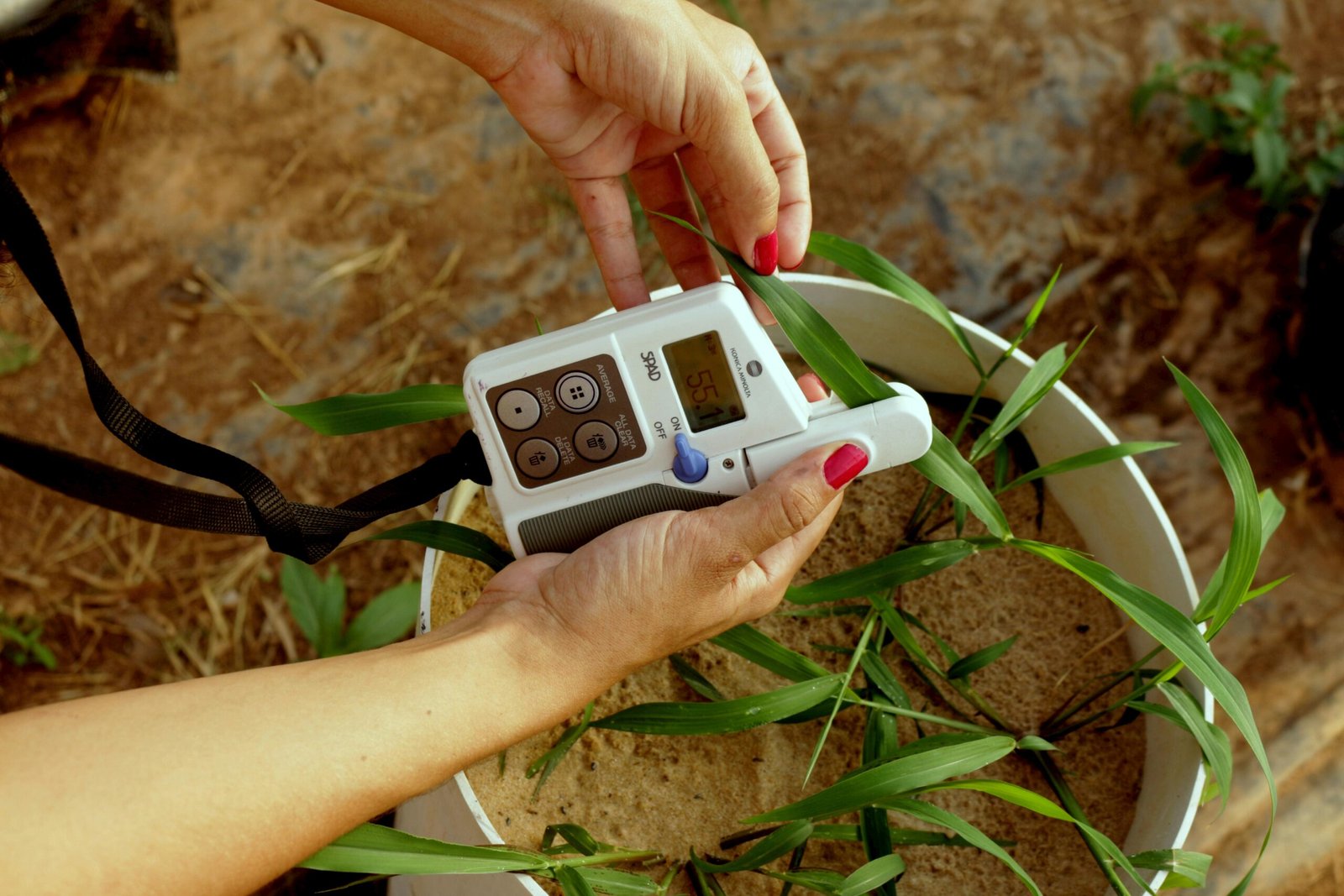
Precision cotton management in 2026 relies on Hyperspectral and Thermal data fusion.

  • The AI “X-Ray”: By combining UAV-based thermal imagery (which detects water stress via canopy temperature) with hyperspectral data (which detects Nitrogen status via the Red-Edge position), AI models can now differentiate between a “thirsty” plant and a “hungry” one.
  • Feature Selection: Leading research (e.g., Frontiers in Plant Science, 2025) has identified five critical spectral features—NDVI, NDRE, GRVI, and specific Mean Red/Blue bands—that allow Random Forest algorithms to estimate cotton plant nitrogen concentration with 97%–98% accuracy.

🤖 2. Advanced AI Modeling Techniques

Two specific AI architectures have become the “standard” in 2026 for managing cotton’s complex growth stages:

A. Nested Dual-Agent Reinforcement Learning (NDRL)

Published in late 2025, the NDRL framework uses two “agents” to manage the field:

  • The Parent Agent: Identifies “Macro” actions (e.g., determining the total amount of N and water needed for the next two weeks based on yield projections).
  • The Child Agent: Refines those actions daily based on real-time Water Stress Factors (WSF) and Nitrogen Stress Factors (NSF).
  • Impact: This approach has demonstrated a 5.6% increase in water productivity and a 6.3% increase in nitrogen partial factor productivity.
  • Related Posts

    Phytobiome Communication and plant-microbe signaling for smart farming (Plant Science Research, 2025).

    In early 2026, the agricultural sector is moving beyond simply “measuring the soil” to “listening to the plants.” The field of Phytobiome Communication, which involves the complex signaling between plants,…

    Remote Sensing and Transformer-based Soil Quality Prediction using AI models (Precision Agriculture Review, 2024).

    In early 2026, the integration of Remote Sensing (RS) and Transformer-based AI models has set a new benchmark in precision agriculture. According to the Precision Agriculture Review (2024) and recent…

    Leave a Reply

    Your email address will not be published. Required fields are marked *

    You Missed

    Phytobiome Communication and plant-microbe signaling for smart farming (Plant Science Research, 2025).

    • By admin
    • February 9, 2026
    • 1 views
    Phytobiome Communication and plant-microbe signaling for smart farming (Plant Science Research, 2025).

    Remote Sensing and Transformer-based Soil Quality Prediction using AI models (Precision Agriculture Review, 2024).

    • By admin
    • February 9, 2026
    • 1 views
    Remote Sensing and Transformer-based Soil Quality Prediction using AI models (Precision Agriculture Review, 2024).

    IoT-based Soil Salinity Monitoring using sensors in Watermelon cultivation (Smart Agriculture Research, 2024).

    • By admin
    • February 9, 2026
    • 1 views
    IoT-based Soil Salinity Monitoring using sensors in Watermelon cultivation (Smart Agriculture Research, 2024).

    Artificial Intelligence-based irrigation and nitrogen optimization in Cotton (Precision Agriculture Research, 2025).

    • By admin
    • February 9, 2026
    • 1 views
    Artificial Intelligence-based irrigation and nitrogen optimization in Cotton (Precision Agriculture Research, 2025).

    Organic Fertilizer Substitution and Nitrogen efficiency in Rice production systems (Agronomy Journal, 2025).

    • By admin
    • February 9, 2026
    • 0 views
    Organic Fertilizer Substitution and Nitrogen efficiency in Rice production systems (Agronomy Journal, 2025).

    Crop Diversification for Sustainable Agriculture and ecosystem resilience (Frontiers in Agronomy, 2026).

    • By admin
    • February 9, 2026
    • 1 views
    Crop Diversification for Sustainable Agriculture and ecosystem resilience (Frontiers in Agronomy, 2026).